
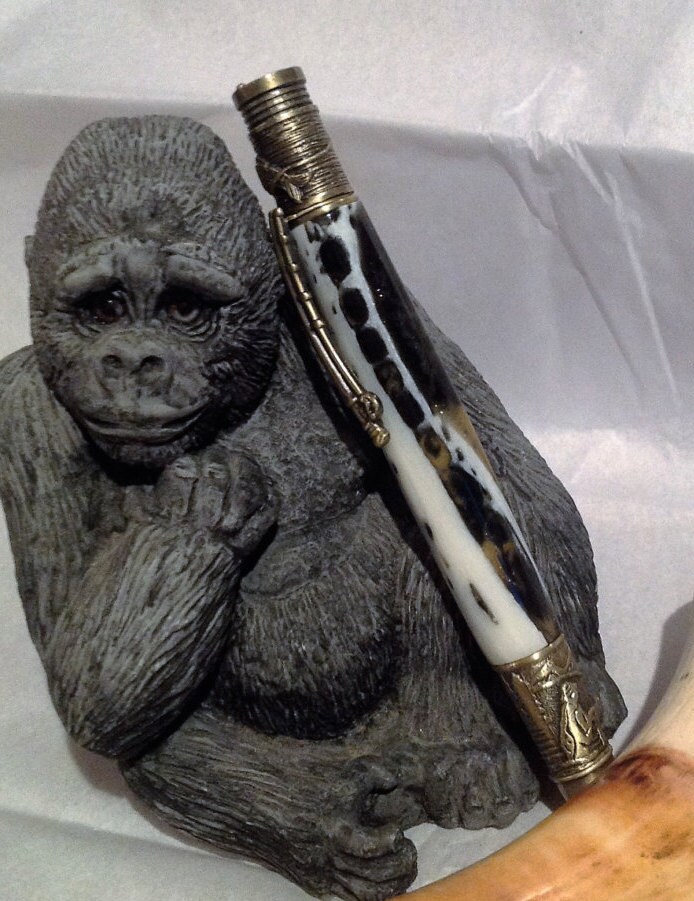
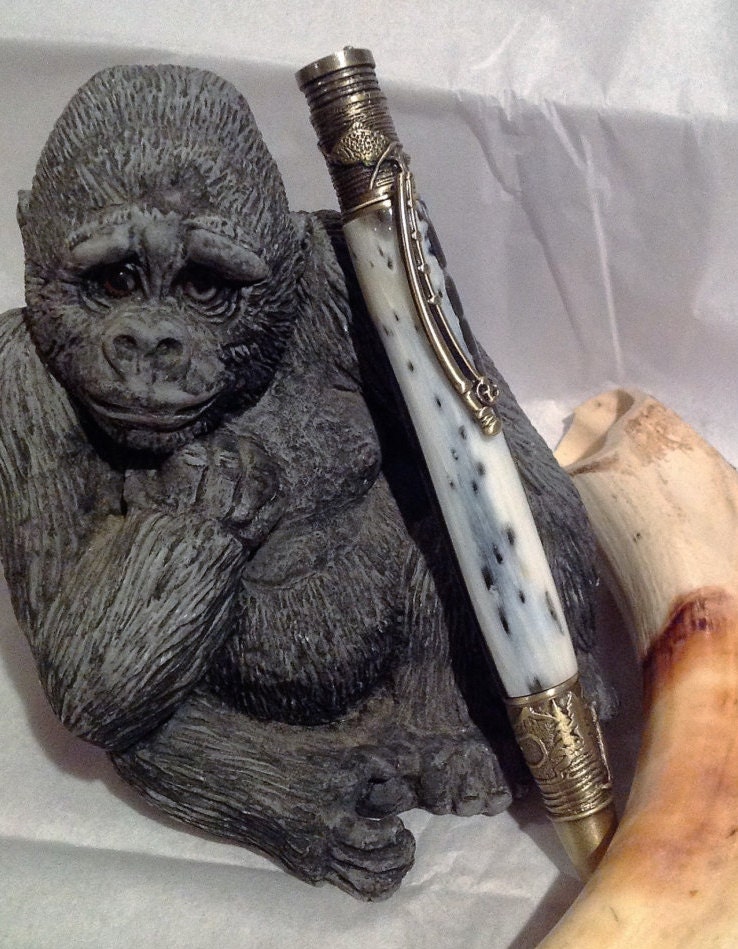
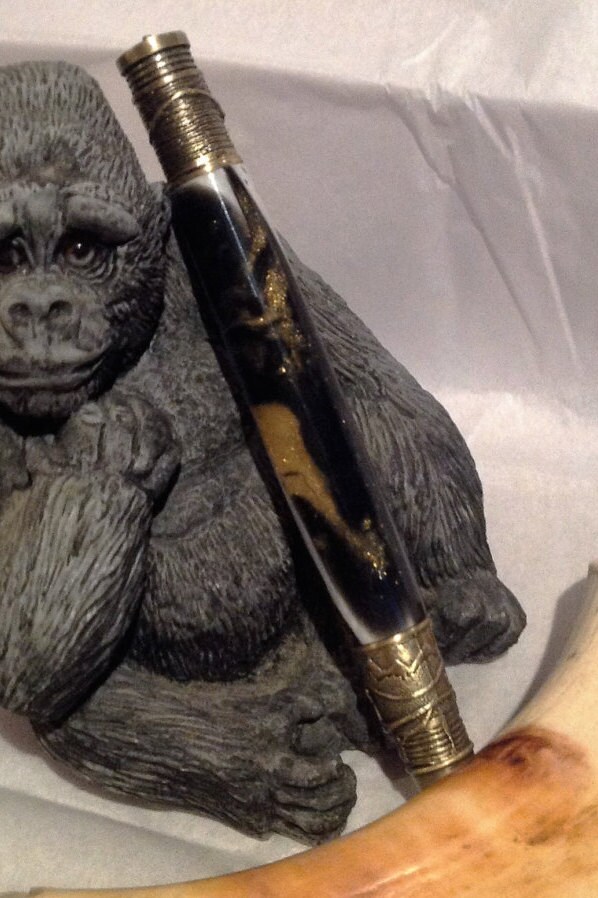
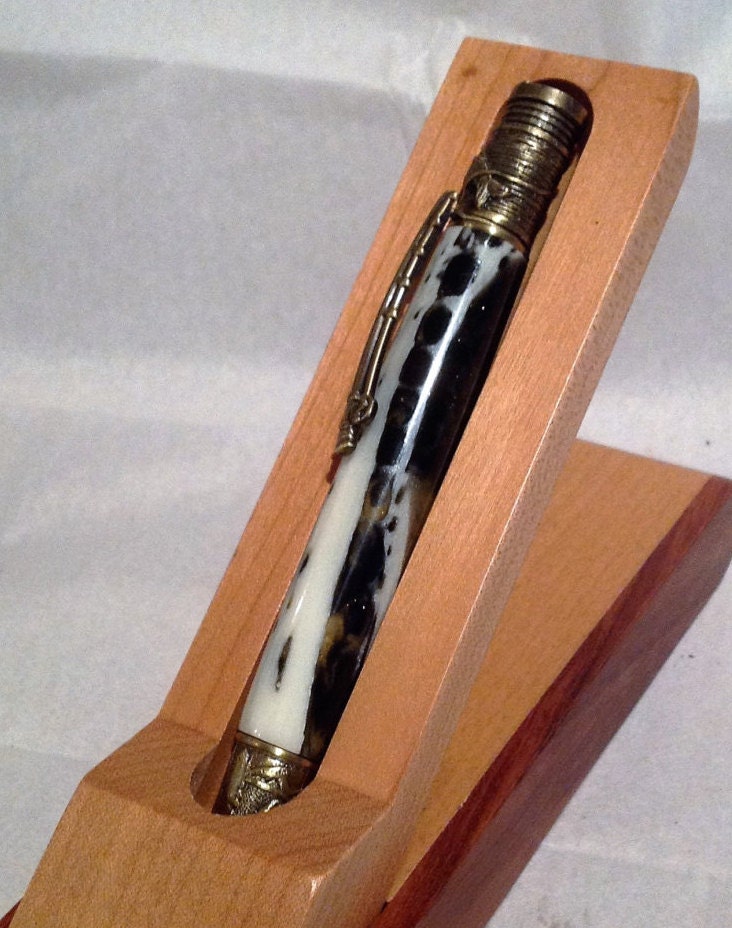
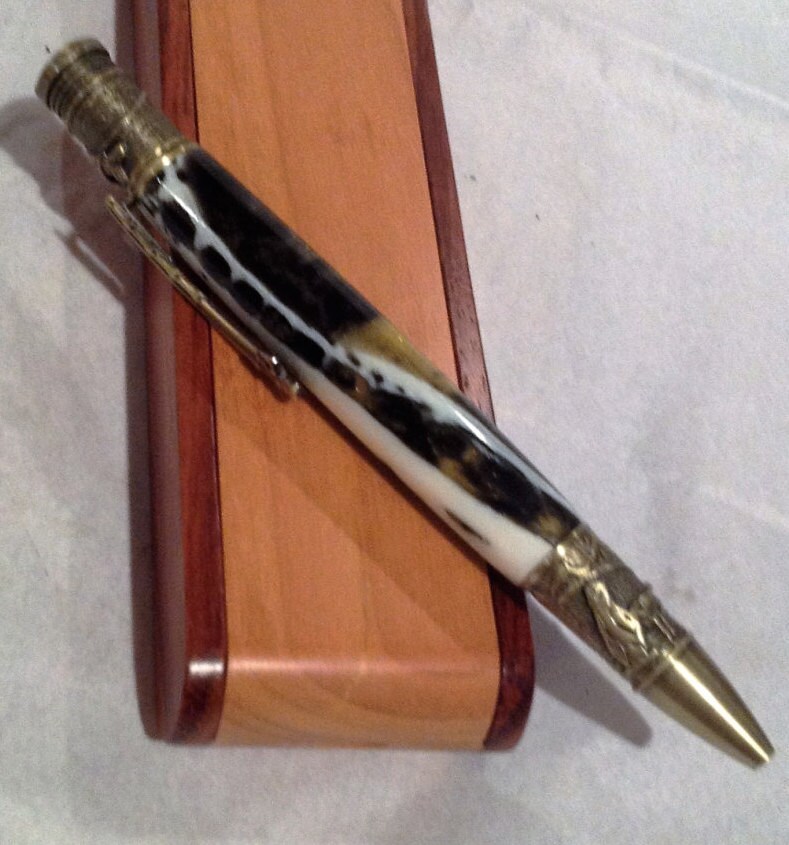
Fly Fishing Twist pen w/ Alligator Jaw Bone and Black Nugget Alumilite pen and Antique Brass Trim (#2608)
Here is a gift that will wow any fly fisherman or woman and capture the essence of the sport they love! Authentic details abound; the pen top features a traditional open spooled fly fishing reel with detailed fly line on the spool. Below the reel is a cast, engraved trout that's caught and fighting in the fly line. The pen clip is a fly fishing rod that you can align below the trout to replicate the trout fighting in the line and capture the feel of the fight as you reel the trout in. Finally, the pen tip features a beautiful 360-degree outdoors scene of a lone fisherman casting his line in front of an intricately detailed mountain backdrop. The pen comes in a Rosewood and Oak folding gift box and takes a Parker style refill.
Arizona Silhouette have this Black Nugget Alumilite and Alligator Jaw Bone pen blank especially made by a man named Tom Barron. Tom takes Black Nugget Alumilite and combines it with the jaw bone of an alligator to create this eye popping pen blank. He meticulously shapes each stabilized jaw bone and then using alumilite resin under extreme pressure casts each jaw bone into the works of art you see here. By using alumilite verses a polyester resin, it offers a more stable platform when interacting with the stabilized alligator jaw bone
AMERICAN ALLIGATOR
The American alligator (Alligator mississippiensis), sometimes referred to colloquially as a gator or common alligator, is a large crocodilian reptile endemic to the southeastern United States. Adult male American alligators measure up to 3.4 to 4.6 m (11 to 15 ft) in length, and can weigh up to 453 kg (999 lb). Females are smaller, measuring around 3 m (9.8 ft). The American alligator inhabits freshwater wetlands, such as marshes and cypress swamps from Texas to North Carolina.
Alligators are apex predators and consume fish, amphibians, reptiles, birds, and mammals. Hatchlings feed mostly on invertebrates. They play an important role as ecosystem engineers in wetland ecosystems through the creation of alligator holes, which provide both wet and dry habitats for other organisms. Throughout the year, but particularly during the breeding season, alligators bellow to declare territory and locate suitable mates. Male alligators use infrasound to attract females. Eggs are laid in a nest of vegetation, sticks, leaves, and mud in a sheltered spot in or near the water. Young are born with yellow bands around their bodies and are protected by their mother for up to one year.
American alligator showing teeth, South Carolina
The American alligator is listed as Least Concern by the International Union for Conservation of Nature. Alligators are now harvested for their skins and meat. The species is the official state reptile of three states: Florida, Louisiana, and Mississippi